Staying Sharp After Certification
2025-08-01
Okay, confession time. After grinding through a full year with SANS Cyber Academy and finally nailing my GCIH in May, I did what any sane person would do—I gave my brain a well-deserved vacation. Summer rolled around, and I was all about that “no cybersecurity books allowed” life. Beach reads only, thank you very much.
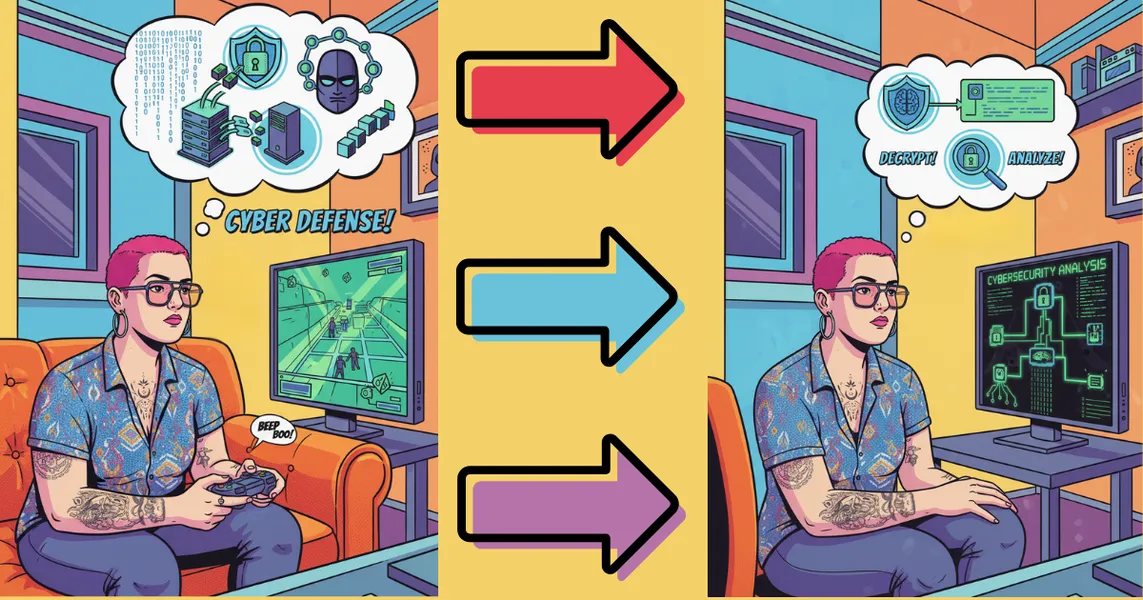
But after only playing Baldur’s Gate 3 every weekend, I started feeling like my hard-earned knowledge was slipping away. You know that feeling when you try to recall something you definitely knew three months ago, and your brain just serves up a 404 error? Yeah, that was me trying to remember PowerShell cmdlets.
Cue the panic attack. 🚨
Earning your certification isn’t the finish line—it’s actually the starting line for a lifelong journey of “ohhhhh crap, I need to keep learning or I’m going to forget everything I just spent a year cramming into my head.”
So I did what any self-respecting cybersecurity professional would do: I picked something I didn’t know too much about (cloud security) and dove headfirst to challenge myself and keep my brain from completely turning to jello. And let me tell you, it worked. Here’s what I’ve learned about staying sharp after certification. Because apparently summer brain breaks are a luxury we can’t afford in this field, yada yada yada.
1. Create a Continuous Learning Schedule 📅
Remember that study schedule that got you through your cert? The one you probably cursed at multiple times but secretly loved because it was a strict routine and kept you accountable? Don’t throw it away just because you passed!
I learned this the hard way during my sexy summer sabbatical. Without structure, my brain basically went back into complacent mode and refused to come back. Now I’ve got a much more manageable routine:
- Week 1: Catch up on the latest security blogs (because threat actors don’t take summer breaks)
- Week 2: Watch webinars or dive into new tools
- Week 3: Get hands-on with labs or personal projects
- Week 4: Network with other humans who also speak in acronyms
Even 30 minutes a week beats the “I’ll get to it eventually” approach that led to my summer brain melt.
2. Follow the Leaders and Innovators 🏆
You know those people who somehow always know about the latest vulnerabilities before they hit the news? Yeah, follow those folks. Set up Google Alerts, subscribe to their newsletters, and stalk their LinkedIn posts (professionally, of course).
After my GCIH, I started following more cloud security experts since that’s where I’m focusing now. It’s like having a personal research team that delivers insights straight to your inbox.
3. Join Professional Communities 🤝
The cybersecurity community is surprisingly welcoming for a bunch of people whose job is to assume everything is trying to kill your network. Join forums, Slack channels, local meetups—wherever security professionals gather to complain about users clicking on phishing emails.
Don’t just lurk! Ask questions, share war stories, help others. I’ve learned more from casual conversations in niche community Slack teams than from some formal training materials.
4. Apply Your Knowledge in Real Projects 🛠️
Here’s the thing about cybersecurity knowledge: if you don’t use it, you lose it faster than a password written on a sticky note. After my brain drain vacation, I realized I needed to get my hands dirty again.
That’s partly why I pivoted to cloud security—it forced me to apply my GCIH foundation in a new context. Suddenly I was thinking about incident response in AWS environments and how network security principles translate to the cloud. It was like doing brain CrossFit.
Look for opportunities to:
- Volunteer for security projects at work
- Build a home lab (because breaking things is fun when it’s intentional)
- Contribute to open-source security tools
- Help friends secure their small businesses
5. Teach Others 🎓
Want to quickly discover what you’ve forgotten? Try explaining it to someone else. It’s humbling and educational in equal measure.
As Director of IT for a district of high schools, literally every single day is me teaching security awareness to others. And let me tell you, explaining why clicking on that “You’ve won a million dollars!” email is a bad idea to a room full of teachers who just want their printer to work? That’s advanced-level cybersecurity education right there.
But here’s the beautiful thing: teaching forces you to break down complex concepts into digestible pieces. When I’m explaining to our C-suite why multi-factor authentication isn’t just “extra annoying steps,” I have to really understand the fundamentals myself. When a teacher asks why their password can’t be “Password123!” I get to reinforce my knowledge about password security while (hopefully) preventing our district from becoming the next ransomware headline.
Every question from staff—whether it’s about suspicious emails, secure file sharing, or why we can’t just disable all the security stuff “just this once”—makes me sharper. It’s like having a daily pop quiz on cybersecurity fundamentals, except the consequences of getting it wrong involve actual teenagers and their PII.
I’ve also started sharing my cloud security learning journey with my team, and every time someone asks a question, I either think “great question!” or “oh no, I definitely knew this three months ago.” Both responses are valuable: one builds confidence, the other identifies knowledge gaps that I need to fill before tomorrow’s inevitable “Why can’t I store sensitive student data on my personal Dropbox?” conversation.
6. Set Learning Goals Beyond Your Current Cert 🎯
What’s next on your certification journey? For me, cloud security became the obvious choice after GCIH. It builds on what I already know while challenging me in new ways.
Having a clear next goal prevents that Now What? feeling that can lead to knowledge decay (speaking from experience here). Research the career paths of professionals you admire and map out your own learning adventure.
7. Regularly Assess and Refresh Your Knowledge 🔄
Schedule quarterly knowledge health checks where you honestly assess:
- What you’ve learned since certification
- What areas make you go “um, I used to know this”
- What new developments you’ve completely missed
- What skills are becoming more important in your field
These assessments are like security audits for your brain—sometimes uncomfortable but always necessary.
The Compound Effect of Staying Sharp 📈
Ugh I hate to say it but small, consistent efforts compound over time. The professional who dedicates just a few hours a month to staying current will develop significantly deeper expertise than someone who considers their learning complete after certification.
Plus, in cybersecurity, staying current isn’t optional, it’s survival. Threat actors aren’t taking breaks so neither can we (well, maybe short ones, but apparently not three-month summer vacations playing video games).
Make It a Habit, Not a Chore ✨
The key is making continuous learning feel natural rather than like homework. I’ve learned to align my learning with my energy levels and interests. Morning person? Start your day with industry reading. Learn better through hands-on work? Build labs and break shit.
Your certification opened the door, but your ongoing commitment to growth is what keeps you competitive, confident, and continuously valuable in this crazy field we’ve chosen.
The Bottom Line 💡
My summer brain break taught me that knowledge, especially in cybersecurity, is perishable. But the good news? It’s also renewable and expandable. By staying sharp and continuously growing, you’re not just maintaining your edge—you’re building expertise that will serve you throughout your entire career.
What strategies have you found most effective for staying current? And please tell me I’m not the only one who’s experienced the post-certification brain melt! Drop your experiences in the comments below—I’d love to hear how others are keeping their security knowledge fresh.